

Mouneh, Preserving Foods for the Lebanese Pantry
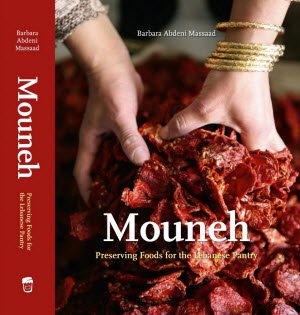
A few days ago our mother arrived from Lebanon for a visit. Aside from the many edible delights that she brought with her including her freshly made Zaatar, Baklava from AbdulRahman Hallab Sweets, fresh batches of Lebanese 7-spices and Sumac spice, she brought us something unique this time, Barbara Massaad’s recent book titled “Mouneh, Preserving Foods for the Lebanese Pantry.”
Background Of Mouneh
“Mouneh” is a Lebanese slang word coming from the Arabic word “Mana” which means to preserve food. Mouneh is a living Lebanese tradition refined through the generations by culture and creativity. And what makes the Lebanese Mouneh specifically so special is the rich mixture and inheritance of civilizations that Lebanon and its surroundings have had over thousands of years, including but not limited to the civilizations of the Phoenicians, Babylonians, Persians, Romans, Byzantine, Islamic Caliphates, Ottoman and up to the recent French colonization.
With that in mind, the people of Lebanon learned to preserve hundreds of food items and staples across seasons, and this is what Barbara’s book is meant to archive.
Barbara’s Mouneh
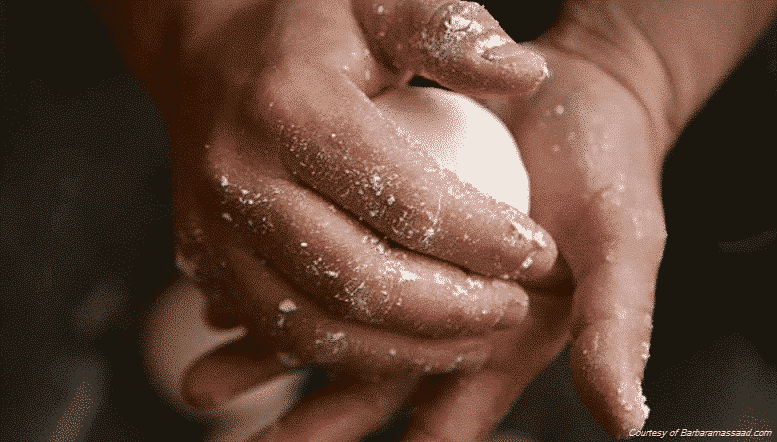
Barbara took over 5 years to write and publish this book. She moved from one Lebanese village to the other, sat down with the old and the young, and she took her time in not only listening to and writing their stories, but also in actually helping out the villagers in their processes of preserving their local foods. Hence, her experience is practical and is first hand.
So this is not a typical “recipes” cookbook. “Mouneh” documents the stories of the people and the traditions behind its recipes as well.
Content and Style Of Preserving Foods for the Lebanese Pantry
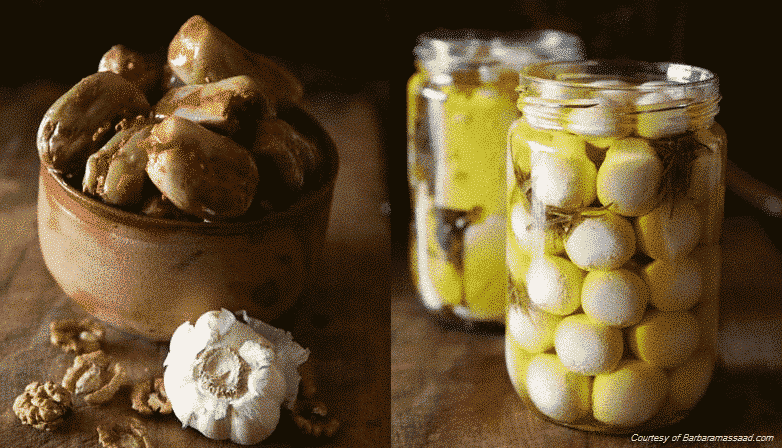
The book “Mouneh” is organized into sections according to the 4 seasons that Lebanon enjoys. Each section contains recipes and methods of naturally preserving vegetables, fruits, grains, crops, spices and dairy products according to seasonal availability. The book has about 590 pages, is full color, and features hundreds of Barbara’s professionally taken photographs, along with photographs by other professional photographers. The book’s images are quite vivid and impressive, and give the book another dimension by helping the reader get fully immersed in the story.
Typically villagers in Lebanon tend to focus on preserving their own local crops and foods, with some exceptions. So it’s not common to find one village that aced it all since nature, weather and even history play a big role in dictating what type of produce or food products each village grows. And that is why Barbara’s work is quite important: it gathers all those precious methods from hundreds of Lebanese villages and people and puts its all in one place. The content is rich.
In terms of writing style, “Mouneh” is a very easy and lively read, despite its intimidating volume. Barbara overviews vividly the personal experiences she’s had in many villages. She talks about people, and their stories, and she talks about their own traditions in preserving local foods, and in some case she talks about villages and their history. From this perspective, the book is quite a piece of cultural archive.
Conclusion
As a final word on Barbara, she is a founding member of Slow Food Beirut, a delegate of the International Terra Madre Community, and Slow Food Italy. She is a contributing editor to local and international publications. She has also worked on an extensive portfolio dealing with children’s portraiture. She lives in Beirut with her husband and three children who are very much involved in her culinary journey.
We found Barbara’s work to be quite impressive and in our opinion, her book is a service to Lebanon’s future generations as it preserves a slowly fading aspect of their culture in such a beautiful and detailed way.
For more information on Barbara Massad and her work, or to buy her book please visit her website.
6 Responses to Review: Mouneh, Preserving Foods for the Lebanese Pantry by Barbara Massaad